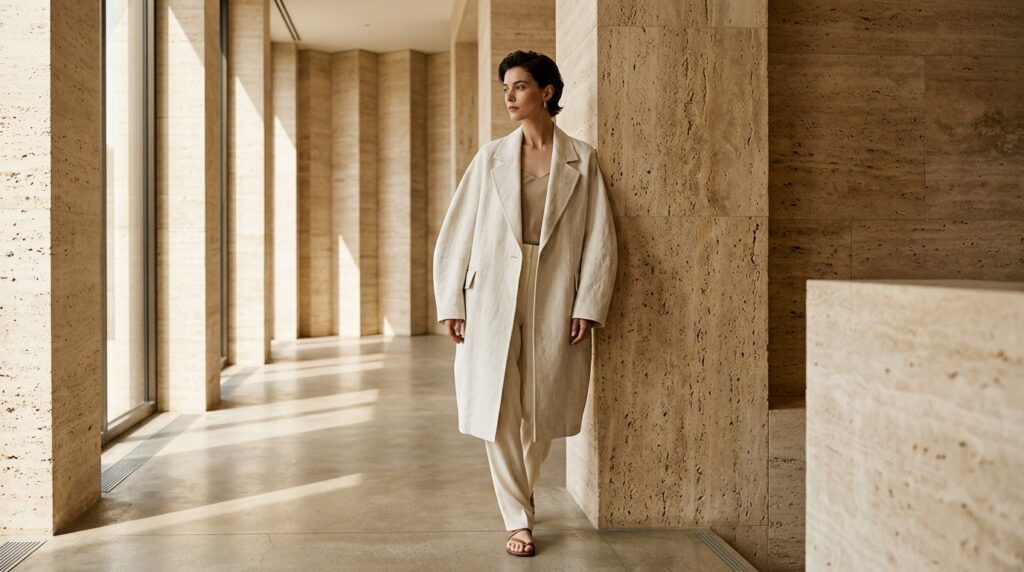
When surface branding recedes into the background, the intrinsic beauty of textile structure and precision pattern-making takes center stage. In recent years, a quiet revolution has quietly reshaped the landscape of high fashion. Discerning individuals are turning away from loud, emblazoned monograms in favor of tactile minimalism—a design philosophy rooted in raw cashmere, hand-stitched selvedge linings, and unpretentious silhouettes that communicate wealth, refinement, and artistic discernment through silence rather than spectacle.
The Power of Unspoken Detail and Materiality
Modern luxury is no longer defined by loud motifs plastered across chest panels or gilded buckle hardware designed for instant algorithmic recognition. Instead, true luxury resides in horn buttons hand-turned by artisan ateliers, double-stitched interior bias bindings, and hand-rolled silk hemlines that only the wearer truly notices. This subtle shift invites a deeper, more intimate relationship with clothing. When a coat relies purely on the weight of 800-gram double-faced wool rather than a brand plaque, its value becomes self-evident through feel and longevity. The tactile sensation of brushing raw, untreated fibers against the skin creates an internal confidence that external branding can never match.

The Sociology of Hidden Luxury in Digital Culture
The emergence of logo-free fashion reflects a cultural desire for privacy and authentic substance in a hyper-visible digital world. When every consumer item is algorithmically optimized for instant visual consumption on screens, unbranded garments act as a protective aesthetic shield. They foster a private nod of recognition among connoisseurs who understand the distinct drape of Loro Piana wool or the subtle stitch density of bespoke Italian tailoring. It is a subtle vocabulary spoken through texture, silhouette, and fluid movement—a secret handshake shared among those who value depth over display.
Sourcing Raw Textiles: Cashmere, Alpaca, and Vicuña
At the heart of tactile minimalism is an obsession with the origin and processing of raw natural fibers. Grade-A Mongolian cashmere harvested from the soft undercoat of mountain goats provides unmatched thermal insulation while remaining weightless against the skin. Similarly, un-dyed Peruvian baby alpaca offers a silky luster and natural water resistance that synthetic blends cannot replicate. By preserving the natural oils and untreated hues of these raw fibers, designers allow the organic character of the earth to define the garment, resulting in pieces that breathe naturally and regulate temperature across changing microclimates.
Investing in Garments That Age Gracefully
Unlike fast-fashion items that deteriorate after a single season, tactile minimalist garments are engineered to develop a rich, personal character over time. Raw leather jackets soften to mirror the wearer’s posture, while unwashed denim breaks in to form custom fading along stress points. Choosing quality over quantity means building a wardrobe that becomes more uniquely yours with every wear, turning aging into an asset rather than a defect. By surrounding yourself with garments that mature alongside you, clothing ceases to be a consumable commodity and becomes a living record of your journey.
Deepening Perspective: Part 1
Subtle craftsmanship relies on generational knowledge passed down through historic atelier workrooms. When examining a garment from the inside out, every blind hem, double-faced seam, and reinforced armhole reveals an unwavering commitment to structural endurance. Modern luxury consumers are increasingly seeking out independent pattern-makers and slow tailors who prioritize natural drape over volume production. Furthermore, when considering the long-term impact of tactile minimalism: beyond logos and monograms, one begins to notice how subtle choices compound into a cohesive lifestyle philosophy. Emphasizing quality over quantity across all dimensions ensures that every artifact, routine, and environment we cultivate serves our well-being and elevates daily living.
Deepening Perspective: Part 2
Sourcing organic fibers requires a deep understanding of soil health, animal welfare, and regional water conservation. Wool shorn from free-roaming mountain sheep possesses a natural crimp and elasticity that synthetic polyester imitations can never replicate. By investing in garments made from unbleached organic linen, cold-milled wool, and grade-A cashmere, you align your personal aesthetic with sustainable environmental stewardship. Furthermore, when considering the long-term impact of tactile minimalism: beyond logos and monograms, one begins to notice how subtle choices compound into a cohesive lifestyle philosophy. Emphasizing quality over quantity across all dimensions ensures that every artifact, routine, and environment we cultivate serves our well-being and elevates daily living.